

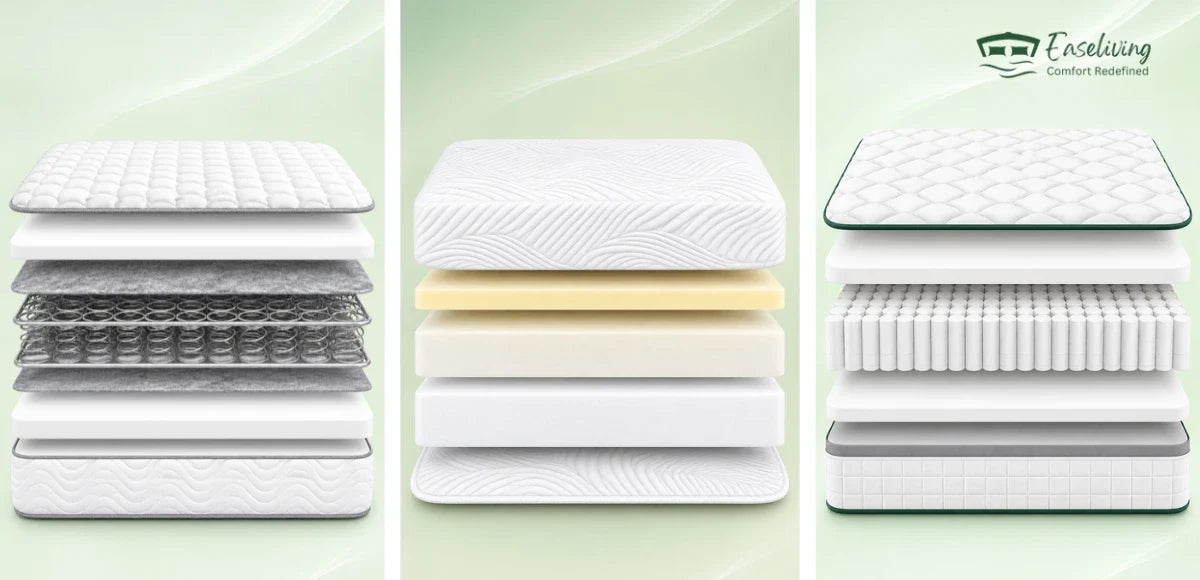
Choosing between a spring mattress and a foam mattress is not always straightforward because both can offer good comfort and support when matched to the right sleeper.
A foam mattress usually gives closer contouring and stronger motion isolation, while a spring mattress tends to feel more responsive and allows better airflow through the core. The better choice depends on your sleeping position, body weight, temperature preference, partner movement, and preferred feel.
In this guide, we compare foam vs spring mattresses across comfort, cooling, movement, support, and sleep style so you can decide which option fits you best.
Key Takeaway: If you prefer a closer, more body-hugging feel, foam may suit you better. If you prefer more bounce, airflow, and easier movement, a spring mattress may be the better starting point.
Should You Choose a Foam Mattress or a Spring Mattress?
There is no single winner. The better choice depends on how you like your mattress to feel and what matters most during sleep.
Choose a foam mattress if you prefer closer body contouring, pressure-relieving comfort, and stronger motion isolation. Choose a spring mattress if you prefer more bounce, easier movement, and greater airflow through the mattress core.
If you sleep hot, share the bed, change positions often, or have a strong preference for cushioning versus responsiveness, those needs should guide your decision more than the material name alone.
How Do Foam and Spring Mattresses Compare in Everyday Comfort?
The biggest differences come down to feel, pressure relief, motion isolation, airflow, and responsiveness.
Key Takeaway: Foam is usually stronger for contouring and motion isolation, while spring systems offer more responsiveness and airflow. Pocket spring and hybrid mattresses can combine features from both, so the best choice still depends on your preferred feel, firmness, and sleep needs.
Foam, Spring or Hybrid: Which Works Better for Cooling and Couples?
If you sleep hot or share the bed, mattress construction can make a noticeable difference to how comfortable the mattress feels through the night.
For Hot Sleepers
Spring mattresses generally allow more airflow because air can move through the open coil structure.
Foam mattresses vary more. Dense memory foam can retain heat, while cooling gel foam, breathable covers, open-cell foam, and natural organic latex can improve temperature comfort.
Hybrid mattresses combine a spring core with foam or natural organic latex, so they can offer airflow underneath while still providing cushioning at the surface.
For Couples and Light Sleepers
If partner movement wakes you, memory foam is a strong option because it absorbs movement well.
Traditional Bonnell springs can transfer more movement because the coils are interconnected, while pocket springs respond more independently and help keep movement localised.
A pocket-spring hybrid can be a useful middle ground, combining responsive support with foam layers that help absorb movement.
Key Takeaway: For cooling, look at airflow and the materials above the support core. For couples, focus on motion isolation, especially memory foam and pocket-spring constructions.
What Should You Consider When Choosing Between Foam and Spring?
The right mattress depends on how you sleep, how much cushioning you prefer, and what kind of support feels comfortable for your body.
1. Start With the Feel You Prefer
If you like a closer, more body-contouring surface, memory foam may suit you better. If you prefer more bounce and quicker response, a spring mattress can feel more natural.
For sleepers who enjoy a softer, more adaptive foam feel, Easeliving’s Pressure Relief Memory Foam Mattress is one spring-free option built around contouring comfort.
2. Consider Your Body Weight
Body weight affects how deeply you compress the mattress. Heavier sleepers generally sink further into the comfort layers, while lighter sleepers may experience the same firmness as harder.
Rather than choosing by weight alone, compare the firmness, cushioning, and support system together. For sleepers who prefer responsive cushioning with stronger support underneath, the 7-Zone Natural Organic Latex Foam Mattress with Bamboo Fabric combines natural organic latex with a high-density foam base.
3. Match the Mattress to Your Sleeping Position
Side sleepers usually need more cushioning around the shoulders and hips, while back and stomach sleepers often prefer stronger support around the midsection.
If you naturally prefer a firmer, more traditional sleep surface, the Ortho Mattress | Firm Innerspring Mattress with Spine Support is one option worth considering.
4. Think About How Warm You Sleep
Spring cores usually allow more airflow than dense all-foam constructions, but foam mattresses can still work well when cooling materials are built into the design.
For example, the Cooling Gel Memory Foam Mattress combines a spring-free foam construction with cooling-focused materials for sleepers who want contouring comfort without choosing springs.
5. Consider Partner Movement
If you share the bed, motion isolation can make a noticeable difference.
Memory foam tends to absorb movement well, while pocket springs respond more independently than interconnected Bonnell coils. The Pocket Spring Mattress | Medium Firm Support and Motion Isolation is a practical example for couples who want a spring feel with less movement across the bed.
6. Look Beyond the Price
A more expensive mattress is not automatically better, and a cheaper one is not automatically poorer value. Compare the materials, construction, firmness, warranty, and how well the mattress matches your sleep needs.
For example, the Ortho Euro Top Mattress | Medium Firm Innerspring Mattress combines Bonnell spring support with added Euro Top cushioning, making the actual construction and comfort fit more useful comparison points than price alone.
7. Check the Construction and Care Requirements
Both foam and spring mattresses can perform well when placed on the right supportive base and cared for properly. Follow the manufacturer’s guidance on rotation, cleaning, and foundation requirements.
Quick Tip: If you like the responsiveness of springs but also want a more cushioned comfort layer, a hybrid such as the Hybrid 7-Zone Natural Organic Latex Mattress can offer a useful middle ground.
Frequently Asked Questions
Can I Add a Memory Foam Topper to a Spring Mattress?
Yes. If your spring mattress is still supportive but feels too firm, a topper can add extra cushioning without replacing the mattress.
Explore Easeliving Mattress Toppers for different comfort options.
Do Foam and Spring Mattresses Need Different Bed Bases?
Both need a flat, stable and supportive foundation, but the exact base requirements can vary by mattress construction. Always check the recommendations for the specific model before use.
Do Foam or Spring Mattresses Need to Be Flipped?
Not always. Many modern mattresses are designed for one-sided use and should only be rotated rather than flipped. Follow the care instructions provided with your specific mattress.
Can a Spring Mattress Become Noisy Over Time?
It can happen as a spring mattress ages or if components become worn. However, noise depends on the spring construction, mattress quality, condition and bed base rather than being guaranteed with every spring mattress.
Is a Pocket Spring Mattress the Same as a Traditional Spring Mattress?
Not exactly. A pocket spring mattress uses individually wrapped coils, while traditional Bonnell springs are interconnected. This changes how the mattress responds to movement and pressure.
Can Easeliving Make a Custom-Size Foam or Spring Mattress?
Yes. Custom sizing is available on selected Easeliving mattresses. Speak with the Easeliving sleep experts to confirm the available dimensions, firmness and construction before ordering.
How Does Easeliving’s 15-Night Trial Work?
Easeliving’s 15-night home trial allows eligible customers to experience the mattress with their normal pillow, bed base and sleep routine. Eligibility and return conditions vary by product, so review the current Easeliving Trial and Return Policy before purchasing.
Still Deciding Between Foam and Spring?
You do not need to choose based on the mattress type alone. The better choice is the one that matches your sleeping position, body weight, preferred firmness, temperature needs, and comfort preference.
Easeliving offers memory foam, natural organic latex, Bonnell spring, pocket spring, and hybrid mattresses across different comfort levels, so you can compare the feel that suits you best.
Backed by 25+ years of mattress-industry experience, Easeliving also offers expert guidance, custom sizing on selected models, and a 15-night home trial on eligible mattresses.


